

Fall protection harness – how to choose the right safety harness for your work
Perhaps the most important thing when working at height is to have a safe and stable safety harness. But how do you know which fall protection harness to choose? In this guide, we’ll go through what to consider when choosing a harness, the different types of fall protection harnesses available, and what’s important to know about safety, comfort and standards.
2-point, 4-point or 5-point harness – which fall protection harness is right for you?
A fall protection harness is a key component of personal fall protection. The right full-body harness reduces the risk of serious injury and is not merely a recommendation but is often a requirement when working at height.
There are several types of harnesses, depending on the task:
- 2-point harness – Used for most types of fall protection work, such as roofing work and work in a cherry picker or on scaffolding. The harness is easy to fasten and provides basic protection for simpler tasks.
- 4-point harness – The harness has straps and two additional attachment points. It is used, for example, when working on masts, as it provides greater stability than a two-point harness.
- 5-point harness – Features an additional attachment point on the front of the belt. Provides the highest level of control and comfort during more demanding tasks.
The type of harness you should choose depends on the working environment, freedom of movement and the type of fall protection equipment used in conjunction with the harness. You can read more about this here our fall protection harnesses and when the different types are most suitable.
Store your anti-slip harness correctly
Always store the harness in a way that protects it from damage and external factors. Feel free to hang it up or put it in a separate bag when it is not in use.
Avoid storing the harness alongside sharp tools or other objects that could damage the material. You should therefore remove tools and accessories after use and store them separately.
Our recommendations by area of use
The fall protection harness for working on roofs

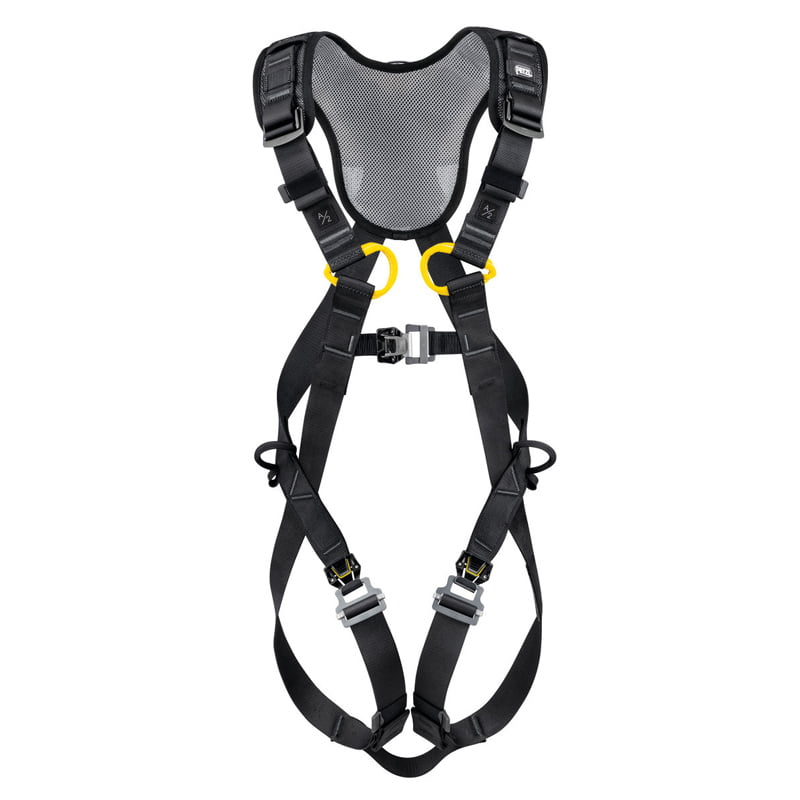
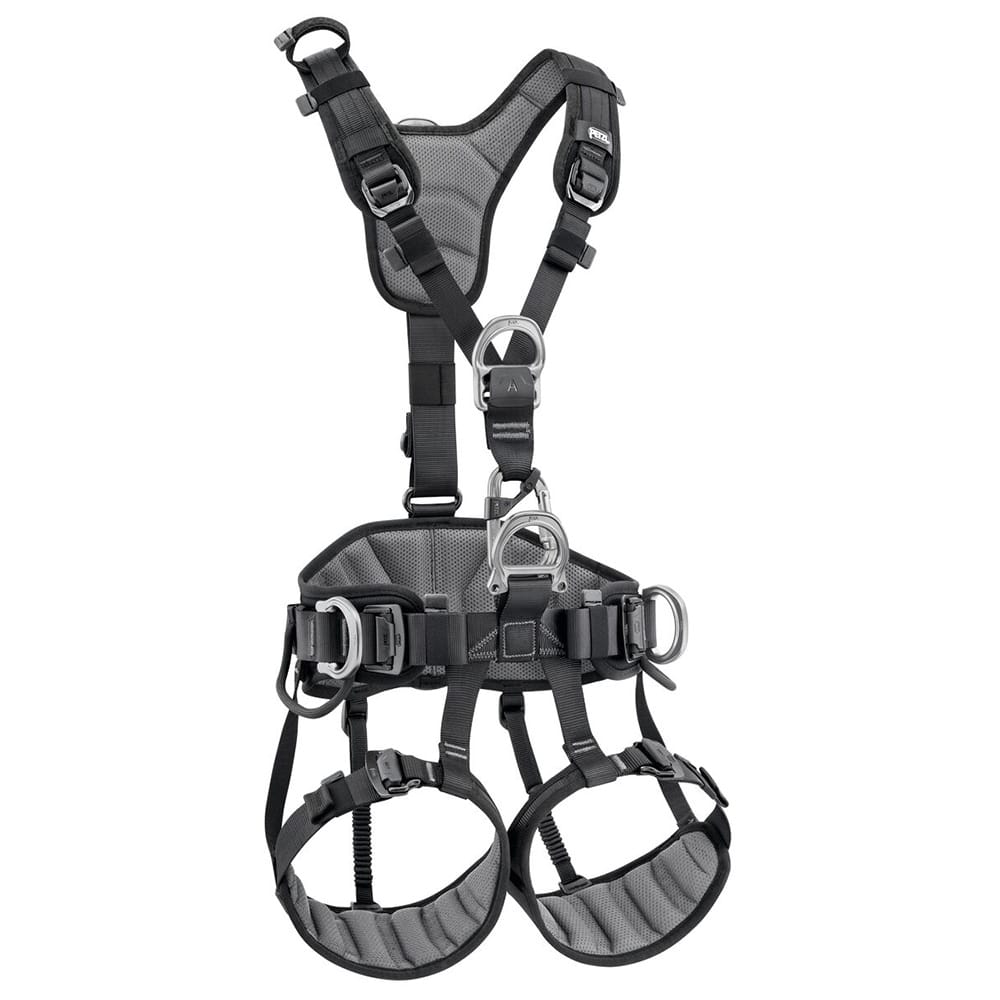
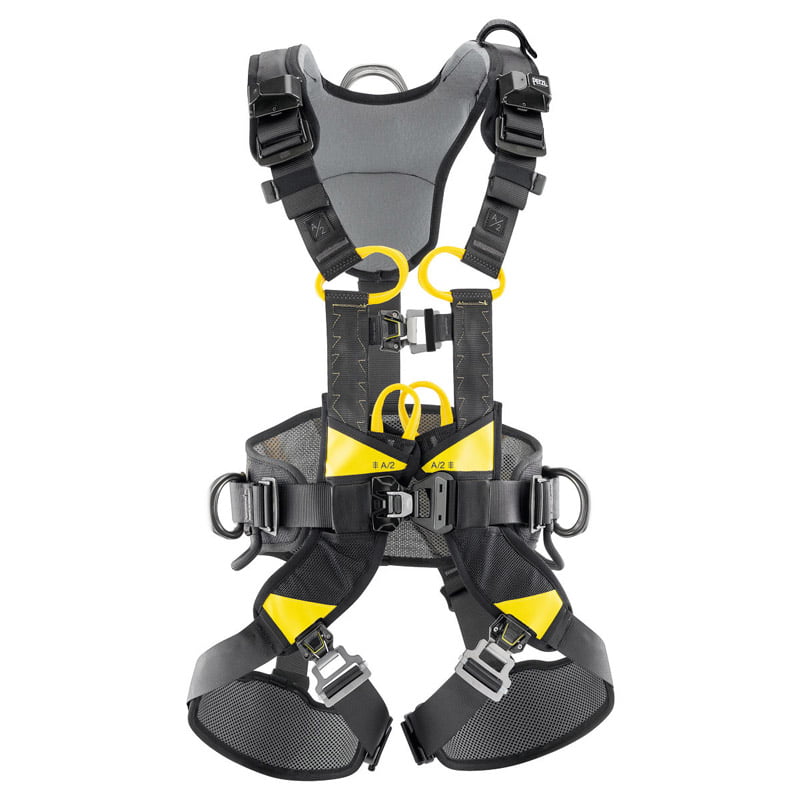


EN 361 and other standards you need to be aware of
EN 361 is a European safety standard for full-body harnesses. The standard sets out requirements for the harness’s design, attachment points and load capacity, and is the fundamental and most important certification for fall protection harnesses. EN 361 is a requirement for work where there is a risk of falling from a height of two metres or more.
Other standards that are important to be aware of are:
- EN 358 – relates to work positioning, and is used when it is necessary to be held in a stable working position, for example when working against posts, façades or structures.
- EN 813 – refers to harnesses (seating position), and is often used in conjunction with other fall protection equipment, particularly in rope access work.
- EN 365 – sets out requirements regarding user instructions, inspection, maintenance and labelling of personal fall protection equipment.
Here you can Find out more about Proacess’s training courses.
Features that make a difference
When choosing a fall protection harness, its features are crucial for both safety and comfort. Quick-release buckles makes the harness easier to put on and adjust, which reduces the risk of incorrect use and saves time at work. Some harnesses come with a built-in trauma band.
All harnesses have D-rings, but the various attachment points have different classifications and are used for different purposes. The points classified for fall protection are called A-points and are usually located on the chest and back. On some harnesses, such as 5-point harnesses, there may also be an A-point at the waist. It is to these points that you attach your fall arrest device.
- Back D-ring – fall protection standard in accordance with EN 361.
- Chest strap – commonly used in vertical work and rescue operations.
- Side brackets – for positioning during, for example, work on masts and poles.
- Ventral attachment – is often used in rope access and abseiling systems.
The D-rings on the sides of the belt are not intended for fall protection, but are used for positioning, for example when working on a mast, pole or in similar situations where the user needs support in their working position.
Fall arrest blocks are another important part of a reliable and safe fall protection systems. In our article on fall arrest blocks You can read more here!
Fall protection harnesses for various applications
Common uses for fall arrest harnesses include:
- Work on roofs
- Rope access
- Rescue and evacuation
- Mast and tower work
- Working in confined spaces
Would you like to find out more about working in confined spaces, basic rescue procedures and working methods? Take a look at Proacess’s training course on working in confined spaces. Here you can also read more about services relating to work at height.
Size and fit – how to choose the right one
A correct fit is essential for safety. A safety harness must:
- A snug yet comfortable fit
- Do not restrict mobility
- Be tailored to your body shape and clothing
An incorrect fit can affect the level of protection in the event of a fall and reduce the effectiveness of your fall protection equipment.
Inspection, storage and when to replace the harness
A fall protection harness must be checked regularly, both before and after use. A full-body harness that has been subjected to a fall must always be taken out of service and replaced.
A few things that are important to bear in mind:
- Visual inspection of straps and seams
- Documented checks
- Proper storage to prevent wear and tear
Here you can read more about how best to store fall protection equipment.

Do you need help choosing the right child car seat?
Your safety is always our top priority. To help you prevent injuries in the workplace, we offer fall protection equipment, fall protection training and services to meet all your needs. Please get in touch if you have any questions about choosing the right fall protection harness, or if you’d like to book an inspection of your fall protection equipment.
Frequently Asked Questions about fall protection harnesses (FAQ)
How often should a fall arrest harness be checked?
When must you use a fall protection harness?
How long does a seatbelt last?
What does a personal fall protection system consist of?