


Working in confined spaces - risks, rules and safety measures
Working safely in confined spaces requires the right knowledge, clear procedures and equipment that does its job. Here you will find guidance on what hazards exist, what rules apply and guidelines on how to work safely in confined spaces with limited air circulation.
What is meant by working in confined spaces?
A confined space is usually a place with narrow passages and small openings where air does not circulate properly. They can be cisterns, wells, silos, tunnels, containers, culverts or large tanks. Often, the space is intended for temporary use, such as for repair, cleaning or inspection.
Many different sectors are involved - industry, agriculture, water treatment, waste management, transport and construction to name a few. Some common tasks include maintenance, welding, cleaning, servicing machinery or pumping systems, and emptying containers.
What are the risks of working in confined spaces?
Hazardous gases and oxygen deficiency
If you breathe the wrong air, you will often notice it quickly. Microorganisms or chemical processes can deplete the oxygen in the air to the point of causing fainting or respiratory arrest. Gases such as swamp gas, methane gas or carbon monoxide can also sneak in without you realising. High concentrations can make you dizzy, nauseous or simply knock you out.
Chemical risks and pollution
Many closed environments contain residues of hazardous substances. Vapours from solvents, fuels, acids or pesticides can cause acute and long-term damage. Also, dust and fumes from welding or grinding remain longer in confined spaces than in the open air.
Fire and explosion risk
When the air is still, the smallest spark can start a chain reaction. Flammable gases and liquids, or dust from organic material, can quickly reach levels where a tool striking sparks is enough to start a fire or explosion. Therefore, levels must always be checked with measuring instruments before and during work.
Physical risks (confined spaces, falls, heat)
Small, enclosed spaces often have winding passages and limited visibility. It can be easy to trip, lose your footing or hit your head. Many such spaces heat up quickly, especially if you are working with machines or tools that emit heat. Sometimes there is a risk of slipping, or of objects falling down. If water gets in or hot steam is released, serious injuries can occur in just a moment.
Industries where work in confined spaces is common
Confined space work occurs in industries where there is a need to inspect, maintain or clean spaces with limited access and ventilation.
These include the water and wastewater sector, industries with tanks and cisterns, energy production, construction, and the transport and logistics sector, where cargo holds and silos need to be checked and serviced. The process industry, food industry and property management also often need it in areas such as boilers, culverts, basins and wells.

Employer's responsibility for work in confined spaces
Before anyone steps in, the employer must carry out a thorough risk assessment and document the results. A formal work permit is often required, with both the supervisor and the worker confirming that the risks have been reviewed and that all protective measures are in place.
It is the employer who leads the whole safety effort. This responsibility is primarily about identifying risks in the workplace, equipping employees with the right equipment and training, and ensuring that emergency services are always ready. In the event of an accident, help must arrive quickly, without putting anyone else at risk.

Laws on work in confined spaces (AFS)
The Swedish Work Environment Authority has clear rules on working in confined spaces. The regulations govern, among other things, how the employer must investigate the risks, what protective measures are required and what applies to personal protective equipment, training and emergency procedures.
The laws that apply are:
Safety measures when working in confined spaces
Ventilation and air quality measurement
Before work starts, the space needs to be ventilated as best as possible. Just opening a hatch is not enough, especially when gases and vapours are heavy and settle. Measure the oxygen level, the presence of gases and explosives before and during work. Often continuous measurement with portable instruments is required.
Personal protective equipment (respiratory protection, protective clothing, etc.)
When the air cannot be guaranteed free of hazards, wear a respirator, sometimes compressed air-fed if oxygen levels are low. Protective clothing, helmet, gloves and fall protection are also needed. The equipment should be adapted to all possible risks detected in advance.
Emergency and rescue procedures
Everyone working in confined spaces should know what to do if the alarm goes off. This means being able to raise the alarm quickly, identify the location and start rescue immediately. Supervisors should be able to pull out an affected colleague at no risk to themselves. The rescue plan should be well thought out and practised, because when it comes down to it, quick decisions can save lives.
Communication and monitoring during labour
Throughout the work, someone must supervise the person in the space. You choose whether you communicate by radio, signal or eye contact depending on the conditions. The most important thing is that contact is not broken. The supervisor must never enter the space themselves, but must be able to call for help and start rescue immediately when a danger arises.
Training and qualification requirements
No one should work in confined spaces without knowledge and training. Training is a requirement and covers everything from risk assessment, rules and protective equipment to first aid and emergency procedures.
Working safely in confined spaces requires training based on knowledge of how risks should be managed in emergency situations. Through our parent company ProAccess, we offer two courses in this area. One is aimed at work in tanks and similar spaces and the other towards work in wells and underground environments where dangerous gases may be present.
Fall protection makes rescue easier and safer in the event of an accident. That's why anyone working or supervising in such workplaces needs practical training on how the equipment works. During our training days, you can try your hand at climbing and practise recognising risks. This minimises the risk of incidents and gives everyone the opportunity to avoid serious accidents or actually save lives when it is most needed.

Checklist for safe working in confined spaces
By following our checklist, you can lay the foundations for safe working. The whole team can quickly check that nothing is forgotten, whether before, during or after work.
Before work
During the work
After work
Equipment for working in confined spaces
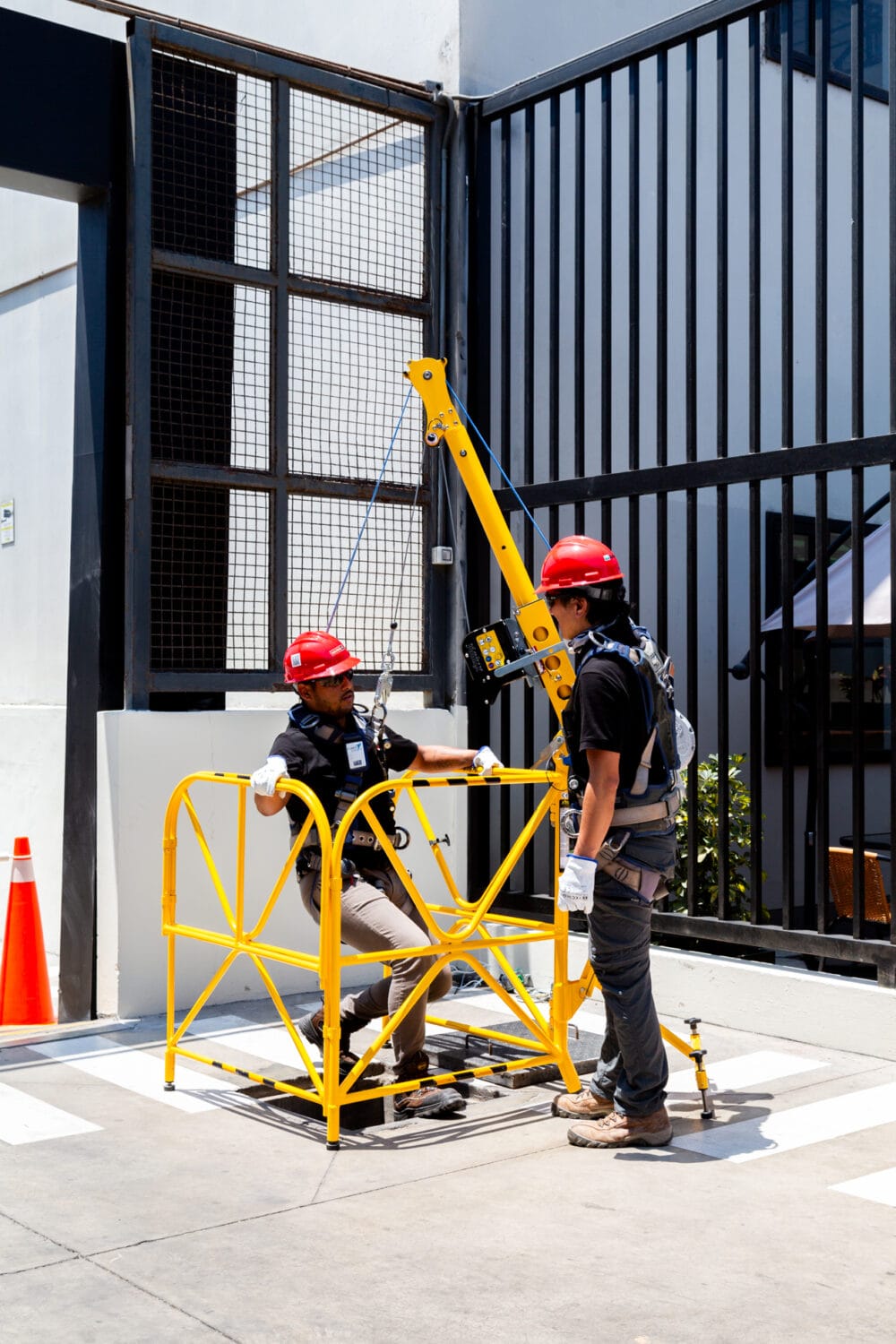
When working in confined spaces, it is important that the equipment matches the task. Being hoisted in a harness places high demands on safety: you must be connected to both winch and a fall protection block with an automatic lock that activates if you fall or if the winch stops working.
When climbing, you need an approved full body harness with D-rings, a certified fall arrest block and rope, and a rescue winch ready to be used if needed. Here, safety relies on all the parts working together and training you on how to use and inspect the equipment.
Frequently asked questions about working in confined spaces
What is classed as an enclosed space?
What are the most common hazards when working in confined spaces?
How to increase safety when working in confined spaces?

Contact us
Do you have questions about which equipment is suitable for working in confined spaces? Do not hesitate to contact us. We have extensive experience in the industry and are happy to share our knowledge, whether it's about equipment, training or rescue operations.