


Safety helmets - How to choose the right helmet for your job
Wearing a helmet in hazardous environments is a given. But choosing the right helmet model is not always easy. Do you need an industrial helmet, a climbing helmet for high-altitude work, or perhaps a combination of these?
Experts in safety helmets
Personligt Fallskydd is part of the ProAccess who are experts in rope access, working at height and other professional climbing. So we don't just sell equipment - we help our customers choose the right solution based on the work environment, risks and applicable requirements.
With over 15 years' experience of wearing harnesses and using the equipment we sell, we know exactly what is required of a safety helmet. Here we guide you to the right safety helmet in 2026 based on how and where you work, whether you're choosing a helmet for yourself or buying for colleagues, teams or organisations.
In this guide, we go through:
- Different types of safety helmets and what the standards mean
- The difference between helmets for working at height and on the ground
- How to choose a helmet based on work environment, risks and certification
- Features like ventilation, fit and compatible accessories
- How colours of safety helmets can be used in the workplace
- Care, maintenance and common mistakes to avoid
- Frequently asked questions about safety helmets

What type of safety helmet do you need?
All safety helmets in our range are carefully selected by us and come from leading manufacturers that we ourselves trust in professional work environments. If you are unsure which model is best suited to your needs, we are happy to help you find out what requirements apply to your particular work environment. Whether you are wearing the helmet yourself or purchasing helmets for your colleagues or employees, these questions can help you choose the model:
Checklist for choosing a safety helmet
✓ Where is the work done? Indoors or outdoors? On the ground or at height?
✓ Is there a risk of falling objects from above?
✓ Is there a risk of falling or hitting the side of the head?
✓ Will the helmet work with a visor, hearing protection or other equipment?
✓ Are there any special requirements in the work environment, such as electrical hazards, limited visibility or long working hours?
3 common mistakes when choosing a safety helmet
✗ Choosing a helmet by price instead of work environment and protection needs
✗ Using an industrial helmet when working at height
✗ Do not check if the safety helmet fits with earmuffs or visor
✗ Using an industrial helmet when working at height
✗ Helmet too heavy, large or small
Features to consider when choosing a safety helmet
A safety helmet that is used frequently needs to be easy to adjust, comfortable to wear and work well with other equipment. This is especially true in occupations where the helmet is worn for many hours at a time, or where working conditions can change throughout the day.
The right helmet supports safety and comfort
A safety helmet will of course protect you in the event of an accident, but it also plays a major role in your ability to work throughout the day. A helmet that fits well, weighs the right amount and is adapted to the work environment will also be used correctly in practice. It may sound obvious, but an uncomfortable helmet risks being misadjusted, taken off unnecessarily or used without the right accessories - which can have a negative impact on safety.
Ventilated safety helmets - when is it worth it?
When working outdoors on sunny days, in poorly ventilated environments or in hot environments such as process industries, a helmet with ventilation is a good choice! But also during long work shifts or if you just sweat a lot naturally. Our helmets with ventilation has mesh ventilation openings that effectively prevent dirt and debris from entering, while keeping you cool during work.
Ventilated safety helmets - when is it worth it?
When working outdoors on sunny days, in poorly ventilated environments or in hot environments such as process industries, a helmet with ventilation is a good choice! But also during long work shifts or if you just sweat a lot naturally. Our ventilated helmets have mesh vents that effectively prevent dirt and debris from entering, while keeping you cool during work.
Industrial helmets (EN 397) - for construction and industrial work
Do you work on construction sites, in industry or similar environments? Then you need an EN 397 helmet instead. EN 397 is the standard for industrial safety helmets and requires the chinstrap to release under a load of between 15 and 25kg. This reduces the risk of strangulation should the helmet get caught on something during work. EN 397 helmets are primarily designed to protect against falling objects from above, but not against side impacts or falls from height.
Typical uses of EN 397 helmets
- Construction and civil engineering
- Engineering industry
- Warehouse and logistics environments
- Maintenance at ground level


Climbing helmet (EN 12492) - for work at height, rescue and rope access
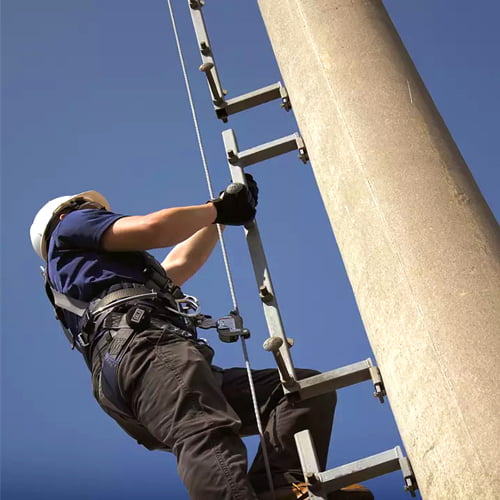
Any work carried out at a height where there is a risk of falling 2 metres or more is considered work at height. The biggest and most important difference between helmets for working at height and for ground work is the way the chinstrap works - and this is determined by the standard to which the helmet is certified. If you are working in a harness, on a roof, on a pole or with rope access, you must use a helmet certified to EN 12492.
EN 12492
This standard requires the chinstrap not to come off in a fall - it must be able to withstand at least 50kg of tensile load. This means that the helmet stays in place even if you hang upside down or get hit from the side. Read more about what happens in a fall and how you can prevent accidentsr. EN 12492 helmets also offer side impact protection, which is particularly important when travelling near sharp edges and hard structures.
Combination helmet (EN 397 + EN 12492)
A combination helmet, which fulfils both EN 397 and EN 12492, is needed when you have a varied working day where you alternate between working on the ground and working at height. As we discussed under Industrial helmets, these two standards have different requirements for the chinstrap, which is why combination helmets exist.
EN 397 (for earthworks)
The chinstrap should break/release at 15-25kg of pressure to avoid strangulation if the helmet gets caught on something.
EN 12492 (for work at height)
The chinstrap must be able to withstand more than 50kg of pressure to keep the helmet on the head in the event of a fall or side impact.
If you move between a construction site at ground level and work on a lift, scaffolding or roof during the same shift, a combination helmet eliminates the need to change helmets when climbing up or down.
Tip. The 3M™ Securefit safety helmet is a combination helmet where a metal-free chinstrap with 4-point attachment allows the user to switch between EN12492 and EN397 standards. .
Our recommendations by area of use
Protective helmets for roof work and rope access
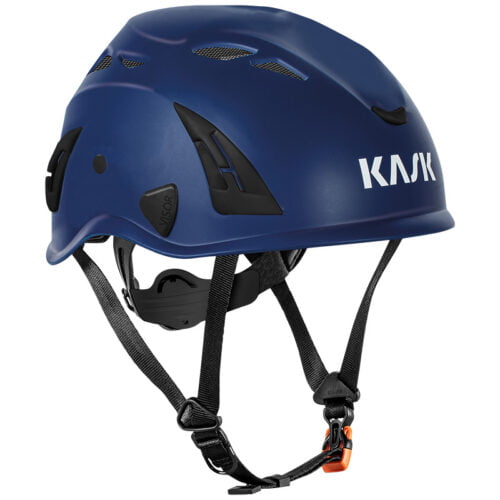
If you work at height or in a harness, you should choose a helmet with EN 12492, for example:


Safety helmets for construction work
For construction work, the choice of helmet depends on whether you are working on the ground or at height and whether you come into contact with electricity or not. Do you work on the ground? Then you need EN 397. See examples of hard hats for construction work:


Safety helmet accessories hearing protection, visor, headlamp
A helmet is not just a one-off purchase, but part of your personal protective equipment that should work over time. Therefore, it can be worth your while to choose a model where spare parts and accessories are readily available, such as chinstraps, visors or hearing protection adapters. Then you should choose a helmet with the right attachments for accessories. This way, you can customise your helmet to meet new needs. We are happy to help both individual users and companies find the right accessories from the start!
🎧 Ear muffs
Earmuffs that can be mounted directly on the helmet or via an adapter are a good choice for loud and noisy environments. Our earmuffs are available in different attenuation levels depending on your particular noise environment.
👁 Visor
If you work in an environment with splinters, rain, sun, dust, chips, gravel or UV light, then you should definitely have a visor for your helmet. Many of our visors include screw sets for helmet mounting.
🔦 Headlamp
A hard hat with a headlamp is a must in dark or enclosed spaces and when working outdoors at night.
💡Tips!
The Swedish Work Environment Authority has a calculator to calculate daily noise exposure level.
How to maintain your safety helmet
Our helmets have a 12-month inspection interval to ensure safety in use. The inspection interval is important and means that it must undergo a controlled inspection at regular intervals, according to law, regulation or ordinance. But it is also important to keep an eye on the condition of your helmet yourself! Follow these steps to ensure that your safety helmet keeps you safe.
Step 1: Carry out regular checks
Inspect the helmet before each work shift and look for visible defects such as cracks, nicks or discolouration in the plastic. Dirt can hide damage and the wrong cleaning method can weaken the material.
Step 2: Clean your helmet properly
Clean the helmet with the supplier's cleaner (e.g. Kask Cleaner) or with water, pH-neutral soap and a soft cloth. Never use aggressive cleaning agents, as these can break down the protective properties of the plastic.
Step 3: Maintain the interior
Replacing the sweatband regularly is important both for hygiene and to keep the helmet secure, comfortable and firm.
Step 4: Store your helmet correctly
Plastic is sensitive to impacts that can make it brittle. The helmet should not be exposed to extreme cold or hot temperatures or strong liquids. Be sure to protect it from direct sunlight when not in use, as UV radiation can accelerate the ageing of the plastic.
Colour of safety helmet
The colour of a safety helmet is not always (only) about aesthetics and visibility! Safety helmets sometimes, but not always, have specific colours to make it easier to quickly see who has what role in the workplace, for example:
- White helmet - supervisor, site manager or other staff in charge of work
- Green helmet - safety officer
- Yellow helmet - construction worker
- Blue helmet - technical operators and carpenters
But, again, there is no legal standard, the colours of the helmets follow the workplace's own procedures, so the same colour can have different meanings depending on where you work. Our safety helmets are generally available in the colours blue, black, green, red, orange, yellow, black and white. Contact us if you are interested in a hi-vis (hi-visibility) helmet!
Comparison between different safety helmets
| Helmet type | Standard | Primary focus | Hook strap (function) | Side collision protection | Typical areas of work |
|---|---|---|---|---|---|
| Industrial helmet | EN 397 | Marrow work | Dissolves (at 15-25kg) to avoid strangulation | Restricted | Construction, industry, warehousing |
| Climbing helmet | EN 12492 | Work at height | Stays in place (withstands >50kg) to protect in case of fall | Yes (Comprehensive protection) | Roof, mast, rope access |
| Combination helmet | EN 397 + EN 12492 | Varied work | Customisable (often via switch or interchangeable bands) | Yes | Mixed construction & height work |
Frequently asked questions about safety helmets (FAQ)
What material are the safety helmets made of?
What certifications are available for safety helmets?
When should you replace a safety helmet?
Are the safety helmets you sell approved by the Swedish Work Environment Authority?
What is the lifespan of your safety helmets?
Is a more expensive safety helmet better?
Which is the best safety helmet?
How heavy should a safety helmet be?
Get help choosing a safety helmet
If you're not sure which helmet to choose, it's always better to ask than to take a chance. That's why we exist! We are happy to help both individual users and companies find the right one from the start. Contact us and we'll help you choose the right model based on the task, certification requirements, work environment and need for accessories. Want to dive deeper into fall protection? Check out our other guides for those working in a fall risk environment and our articles in the Fall Protection School.